Open Now
Serving Medical Center Based in Upper Kirby · 2.6 mi away
Medical Center's residential fabric — 1960s–1980s garden-style condo complexes, mid-century single-family homes in Southgate and Old Braeswood, and a wave of 2000s–2020s three-story townhomes — creates an unusually wide spread of electrical vintages within a few city blocks, all sitting in FEMA Zone AE flood territory near Brays Bayou. Aging original panels in older condo buildings, post-Harvey and post-Beryl flood damage to subpanels and meter bases, and the City of Houston permit requirements that apply to every trade scope here make choosing a licensed electrician with actual Inner Loop condo experience matter more than it might elsewhere.
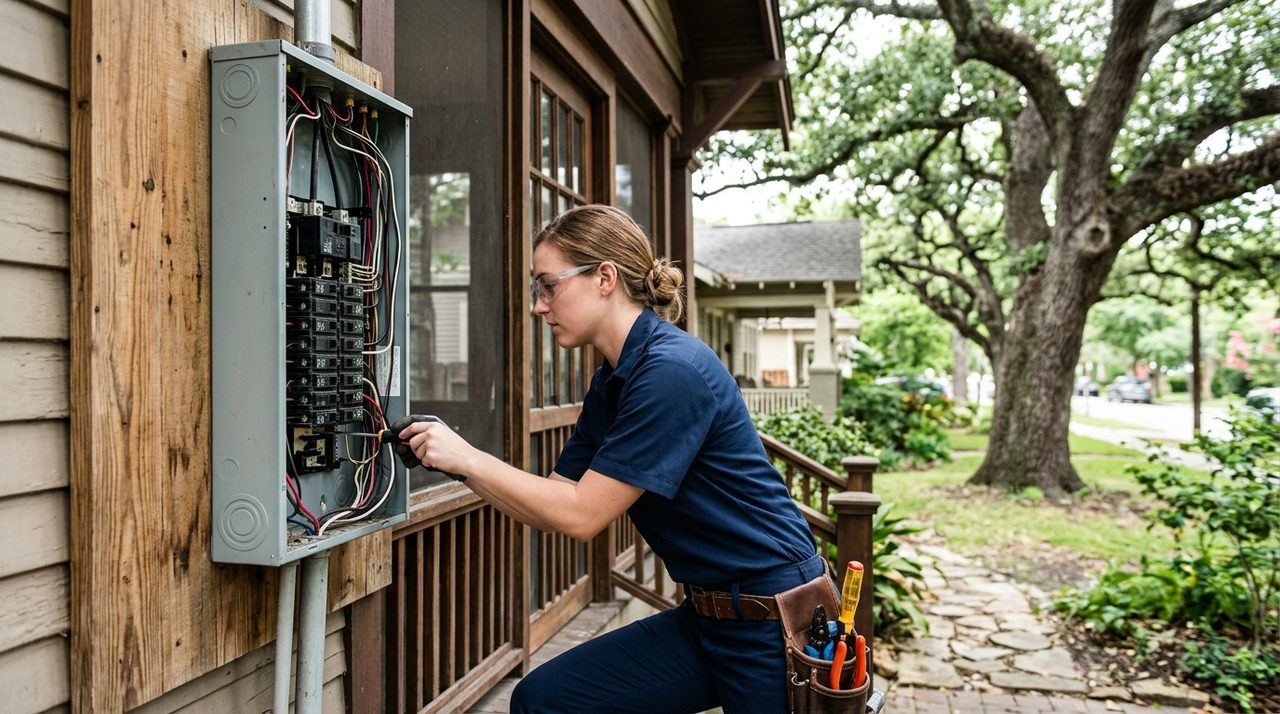
Ranked by verified Google rating × review volume × verification tier. How we rank →
Some highly-rated pros serve Medical Center from nearby and may not keep a Medical Center street address. Those are listed under "Also serving Medical Center" with their real city and distance, so you always know where each business is based.
Highly-rated pros based nearby who cover Medical Center. Distance shown from the Medical Center area.
Serving Medical Center Based in Upper Kirby · 2.6 mi away
Serving Medical Center Based in Upper Kirby · 2.7 mi away
Serving Medical Center Based in Braeswood · 4 mi away
Serving Medical Center Based in Bellaire · 4 mi away
Serving Medical Center Based in Tanglewood · 4.3 mi away
Serving Medical Center Based in Bellaire · 4.5 mi away
Serving Medical Center Based in EaDo · 5.1 mi away
Serving Medical Center Based in EaDo · 5.3 mi away
Serving Medical Center Based in Bellaire · 5.6 mi away
Serving Medical Center Based in Lazybrook / Timbergrove · 5.6 mi away
Why it matters to you
Garden-style condo complexes built along the Brays Bayou corridor in the 1970s and 1980s frequently house their main electrical rooms, subpanels, and individual unit meter stacks at or near grade level — exactly where floodwater from Harvey 2017 and Beryl 2024 sat for days. Even after drying, submerged breakers lose their UL-rated interrupting capacity, internal bus connections corrode, and breaker handles can seize, creating a silent fire and shock risk that unit owners and condo boards often overlook until a panel starts nuisance-tripping. Because this area falls in FEMA Zone AE, any panel replacement permitted through the Houston Permitting Center must also address flood-elevation requirements for the new equipment.
What a good pro does
A qualified electrician should perform a full visual and thermal-imaging inspection of every panel and subpanel that was below flood stage; corroded or submerged equipment must be replaced rather than dried and reused. The Master Electrician pulling the permit through the Houston Permitting Center is responsible for confirming that replacement meter bases and subpanels are elevated or flood-proofed to the Base Flood Elevation shown on the FEMA Flood Insurance Rate Map for the specific parcel, which varies block to block along Brays Bayou. Budget estimates for subpanel replacement run $800–$1,800 per unit panel installed, though condo common-area main gear can run substantially higher.
Sources: FEMA National Flood Hazard Layer (NFHL), City of Houston Permitting Center, Texas Department of Licensing & Regulation
Why it matters to you
A significant portion of the Medical Center's older condo stock and the pre-1980 single-family homes in adjacent Southgate and Old Braeswood were wired during the aluminum branch-circuit era (roughly 1965–1975), when single-strand aluminum was code-compliant in residential construction. At receptacle and switch terminations, aluminum oxidizes and loosens over time, generating localized heat that can ignite surrounding materials — a risk that shows up acutely when units are gut-renovated and new appliance loads are added without addressing the original wiring. Inspectors flagging aluminum wiring during a pre-sale or post-renovation inspection is a common transaction complication in this neighborhood.
What a good pro does
Full copper replacement is the most thorough resolution, but whole-home remediation with CO/ALR-rated devices and AlumiConn connectors at every termination is a recognized alternative that a TDLR-licensed Master Electrician can permit and complete without full rewiring. Houston Permitting Center requires a permit for this scope, and the electrician should document each termination point for the inspection record. Whole-home remediation in a typical 1,200–1,800 sq ft Medical Center condo or mid-century ranch runs an estimated $3,500–$8,000 depending on the number of circuits and unit accessibility.
Sources: Texas Department of Licensing & Regulation, City of Houston Permitting Center, International Residential Code (as adopted by City of Houston)
Why it matters to you
Unlike a freestanding single-family home, electrical work in the Medical Center's condo and townhome complexes must clear two separate approval tracks: the City of Houston electrical permit from the Houston Permitting Center and the individual building's condo or townhome association, each of which has its own rules about common-area access, insurance certificates, staging areas, and exterior conduit or equipment visibility. Skipping the association approval — even for interior work that touches a shared electrical riser or common-area panel — can result in stop-work orders from the building manager and personal liability if association insurance is voided. The patchwork of mandatory associations here (Braeswood Place HOA, individual condo regimes, townhome associations) means there is no single rulebook; the applicable deed restrictions and condo declaration must be checked for each property.
What a good pro does
A competent electrician working in Medical Center condo or townhome buildings should request the condo declaration or HOA architectural guidelines before scoping work, confirm whether the planned scope touches any common-area electrical infrastructure, and obtain written association approval before scheduling the Houston Permitting Center inspection. Condo association approval timelines can add two to four weeks to a project schedule, so factor that into any renovation timeline. Homeowners should verify current association contacts through hoa.texas.gov or the deed restriction filings on file with Harris County.
Sources: Local HOA / deed restrictions (see area profile), City of Houston Permitting Center, Municipal permit office (see area profile)
Why it matters to you
Medical Center's original 1970s condo units and mid-century single-family homes were commonly built with 100-amp services sized for all-gas cooking and heating — adequate at the time but now strained by the electric space heaters, portable heat pumps, and heat-pump water heaters that many residents added after Winter Storm Uri's 2021 gas supply failures. Three-story townhomes built in the 1990s and early 2000s that received only 150-amp service face similar pressure as EV ownership grows among the area's large medical professional population. Nuisance tripping, overheated conductors behind walls, and flickering lights during peak evening demand are the warning signs homeowners in older Medical Center buildings most commonly report.
What a good pro does
A TDLR-licensed Master Electrician should perform a load calculation per NEC Article 220 to quantify the actual demand versus the panel's rated capacity before adding any new continuous load. In older condo buildings, upgrading a single unit's service may require coordination with the building's electrical engineer and the condo association, because the unit subpanel typically feeds from a shared riser. A full 100A-to-200A main service upgrade for a freestanding Medical Center single-family home runs an estimated $1,800–$3,200 installed with permit through the Houston Permitting Center; condo unit subpanel upgrades vary based on riser access and association requirements.
Sources: Texas Department of Licensing & Regulation, City of Houston Permitting Center, International Residential Code (as adopted by City of Houston)
Hiring electricians in Medical Center? The Medical Center area is a patchwork of mid-century condos, newer townhome infill, and older single-family subdivisions, each with its own HOA or civic club governance. Situated in FEMA Zone AE high-flood-risk territory near Brays Bayou, flood mitigation and water damage remediation are recurring service needs. Contractors must navigate property-specific association rules, aging building systems in 1960s–1980s multifamily complexes, and modern code requirements for newer infill construction.
Building era
1960s–1980s multifamily and condo stock predominates, with significant 1990s–2020s townhome and infill construction; some pre-1950s single-family homes in adjacent subdivisions like Southgate and Old Braeswood.
Typical style
Garden-style condominiums (2–3 story brick/stucco), contemporary 3-story townhomes, mid-century ranch and traditional single-family homes, with newer large-lot replacement builds.
Foundations
Predominantly slab-on-grade; some older single-family homes may have pier-and-beam foundations.
Common systems
Older condos and apartments typically have original or once-updated central HVAC, copper or galvanized plumbing, and aging electrical panels; newer townhomes feature modern high-efficiency systems, PEX plumbing, and 200-amp electrical service.
What that means for repairs
Older 1970s–1980s condo units are frequently gut-renovated with updated kitchens, bathrooms, and HVAC systems. Mid-century single-family homes are either extensively remodeled or torn down for new construction. Flood damage repair and elevation projects are common given the area's flood history.
Permit jurisdiction
City of Houston — Houston Permitting Center.
HOA & deed restrictions
No single overarching HOA exists. The area is a patchwork of mandatory condo/townhome associations for individual complexes and voluntary civic clubs or property owners associations for single-family subdivisions (e.g., Braeswood Place HOA, Southgate Civic Club). Virtually all condos and townhomes have mandatory associations with dues. Specific HOA details should be verified via hoa.texas.gov or deed restriction filings.
Historic districts
No City of Houston historic district designation confirmed for the core Medical Center residential area.
Contractor note
Contractors working on condos and townhomes must coordinate with the specific building's HOA or condo association for architectural approvals, insurance requirements, and common-area access. In the absence of citywide zoning, deed restrictions govern land use and exterior modifications on single-family lots.
FEMA flood zone
FEMA Zone AE (high flood risk) — source: fema_nfhl. The Medical Center area sits in close proximity to Brays Bayou, which is the primary flood driver for the surrounding residential areas. Harris County Flood Control District projects have addressed some capacity issues, but the zone designation reflects ongoing significant flood risk.
Hurricane Harvey impact
Not confirmed with specific block-level Medical Center data from research provided. The broader Brays Bayou watershed experienced severe flooding during Hurricane Harvey (2017), and neighborhoods immediately surrounding the Medical Center — particularly those south and east near Holly Hall, Almeda, and Old Spanish Trail — are widely reported to have sustained significant flood damage. Check Harris County Flood Control District records for address-specific Harvey inundation data.
Heat & humidity load
Aging 1970s–1980s condo HVAC systems are stressed by sustained 95°F+ summer heat, making AC failures and refrigerant issues common peak-season calls. Flat-roof condo buildings are vulnerable to ponding and thermal expansion leaks. High humidity accelerates mold growth in flood-prone ground-floor units and older construction with poor vapor barriers.
Working with contractors here
Contractors in the Medical Center area most frequently handle HVAC replacement and repair in aging condo and apartment complexes, where original 1970s–1980s systems have reached or exceeded their useful life. Plumbing repiping is common in older buildings still running galvanized supply lines. Flood damage restoration — including drywall, flooring, and mold remediation — is a recurring need given the FEMA AE designation and Brays Bayou proximity. Newer townhome and infill work tends to involve finish-out customization and warranty repairs. Job scoping must account for HOA approval timelines, limited parking and staging areas in dense condo complexes, and coordination with building management for access to shared mechanical systems and common areas.
Local Tip
Always ask for a written estimate before work begins. Texas contractors are required to provide one on jobs over $1,000.
The Medical Center area is a patchwork of mid-century condos, newer townhome infill, and older single-family subdivisions, each with its own HOA or civic club governance. Situated in FEMA Zone AE high-flood-risk territory near Brays Bayou, flood mitigation and water damage remediation are recurring service needs. Contractors must navigate property-specific association rules, aging building systems in 1960s–1980s multifamily complexes, and modern code requirements for newer infill construction.
Source: U.S. Census Bureau, ACS 5-Year 2023
Much of Medical Center maps to FEMA Zone AE (high flood risk), so flood-resilient detailing -- elevated equipment, water-tolerant materials, and drainage-first thinking -- is essential here, not optional; risk climbs sharply on blocks nearest Brays Bayou, where it varies parcel to parcel.
Source: FEMA National Flood Hazard Layer (NFHL). Flood zones vary by parcel — verify your individual FIRM panel.
In Medical Center, where FEMA Zone AE inside the 100-year floodplain and proximity to Brays Bayou puts electrical panels at direct risk, have a TDLR-licensed electrician relocate your main panel and subpanels to at least two feet above the base flood elevation before hurricane season opens June 1. Harvey 2017 showed that panels submerged even briefly require full replacement, so pre-storm elevation is far cheaper than post-flood rewiring. Because Medical Center drains toward Brays Bayou, block-level runoff can differ sharply from the mapped zone.
The May 2024 derecho that ripped through Houston with 100-mph straight-line winds downed transformers and sent destructive voltage surges through the grid the moment power was restored — in Medical Center, where FEMA Zone AE inside the 100-year floodplain and proximity to Brays Bayou already stresses your electrical system, a whole-house surge arrester at the meter base is the single highest-value electrician upgrade you can make this season. Have a TDLR-licensed electrician install one before the June–September severe-storm peak. In-city Medical Center work falls under City of Houston floodplain and permitting rules.
Winter Storm Uri 2021 exposed a critical vulnerability for Medical Center homeowners in FEMA Zone AE inside the 100-year floodplain and proximity to Brays Bayou zones: sump pumps and flood-mitigation circuits that had never been tested under load failed when the freeze hit, leaving homes unprotected when pipes burst. Before the next hard freeze, have a TDLR-licensed electrician load-test your sump-pump circuits, verify GFCI functionality in below-grade spaces, and confirm your panel is rated for the draw of any portable heat source you plan to use. With a median build year of 1980, the older building stock here is more exposed to hard-freeze damage than newer construction. Because Medical Center drains toward Brays Bayou, block-level runoff can differ sharply from the mapped zone.
Sources: FEMA National Flood Hazard Layer (NFHL), Ready.gov -- Hurricanes, CenterPoint Energy -- Storm Center, City of Houston -- Emergency Preparedness, Ready.gov -- Winter Weather, Harris County Flood Control District
Houston-specific estimators to plan your project before you call a pro. All results are planning estimates — a licensed local pro confirms the details on site.
Disconnect & drain every outdoor hose bib
Remove hoses, drain the spigots, and cover each with an insulated faucet sock. Un-drained hose bibs are the #1 burst point in a Houston freeze.
Insulate exposed pipes in the attic & garage
Wrap any pipe in an unconditioned space (attic runs, garage walls) with foam sleeves. Houston homes rarely insulate these because they only matter a few nights a year — which is exactly why they burst.
Open cabinet doors & keep a pencil-width drip
On hard-freeze nights, open kitchen/bath cabinets so warm air reaches the pipes and let faucets on exterior walls drip to relieve pressure.
Protect the attic/garage water heater & its lines
An attic or garage tank sits in unconditioned space. Insulate the cold-inlet and hot-outlet lines and confirm the emergency drain pan is clear so a leak doesn't reach the ceiling.
This is a planning estimate only — actual requirements depend on an on-site assessment by a licensed Houston pro. If a pipe has already burst, shut off your main water supply and call a licensed Houston plumber immediately — freeze bursts flood fast.
Sources: City of Houston Permitting CenterTexas Department of Licensing & RegulationLocal HOA / deed restrictions (see area profile)
Sources: FEMA National Flood Hazard Layer (NFHL)City of Houston Permitting Center
Sources: City of Houston Permitting Center
Sources: City of Houston Permitting CenterLocal HOA / deed restrictions (see area profile)
Sources: City of Houston Permitting CenterLocal HOA / deed restrictions (see area profile)