2909 Rogerdale Rd #420997, Houston, TX 77242
Best Carpet Cleaning in Oak Forest
Oak Forest's 1940s–1960s ranch-style homes on Harris County's Beaumont/Houston Black clay sit on a mix of original slab-on-grade and pier-and-beam foundations that were never designed with today's humidity loads in mind — and decades of original carpet installations mean pad moisture, hard-water residue, and pet-urine chemistry are the dominant carpet-cleaning challenges here, not flood recovery. This page explains what those issues look like in a mid-century NW Houston home and what a qualified technician should actually do about them.
Verified against Google Business data
Updated 2026
See the 10 Carpet Cleaning Serving Oak Forest 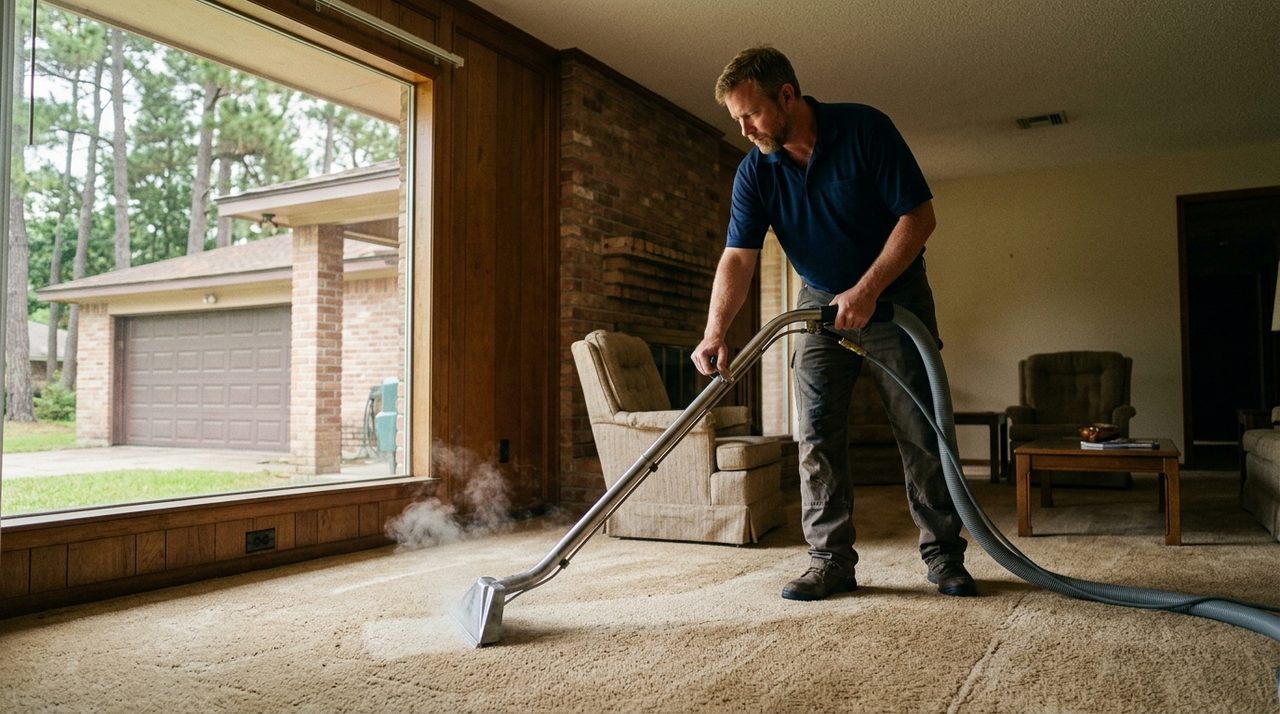
- Median home built
- 1967
- Median home value
- $543,800
- FEMA flood zone
- X (low)
- Typical cost (est.)
- $120–$550
- Most common local issue
- Slab or pier-and-beam moisture wicking through original pad in pre-1970 homes
Ranked by verified Google rating × review volume × verification tier. How we rank →
Some highly-rated pros serve Oak Forest from nearby and may not keep a Oak Forest street address. Those are listed under "Also serving Oak Forest" with their real city and distance, so you always know where each business is based.
Min rating:
10 resultsBased in Oak Forest
Closed
520 Texas Ave, Houston, TX 77204
Also serving Oak Forest
Highly-rated pros based nearby who cover Oak Forest. Distance shown from the Oak Forest area.
Closed
Serving Oak Forest Based in Lazybrook / Timbergrove · 0.1 mi away
Closed
Serving Oak Forest Based in Brookhollow · 1.6 mi away
Closed
Serving Oak Forest Based in Lazybrook / Timbergrove · 1.6 mi away
Serving Oak Forest Based in Lazybrook / Timbergrove · 1.8 mi away
Closed
Serving Oak Forest Based in Lazybrook / Timbergrove · 1.8 mi away
Closed
Serving Oak Forest Based in Lazybrook / Timbergrove · 2.1 mi away
Closed
Serving Oak Forest Based in Brookhollow · 2.3 mi away
Serving Oak Forest Based in Brookhollow · 2.4 mi away
Carpet Cleaning in Oak Forest: What You Should Know
Aging Foundations Let Concrete Moisture Saturate Original Pad From Below
Why it matters to you
Oak Forest homes built between 1945 and 1970 often have thinner or degraded vapor barriers — or none at all on pier-and-beam sections — sitting atop Harris County's Beaumont clay series. Concrete moisture vapor transmission can exceed 3 lbs per 1,000 sq ft per 24 hours on these older slabs, meaning carpet pad in bedrooms and hallways may be damp at the base even when the surface fibers feel dry. After hot-water extraction, that moisture from below keeps the pad wet far longer than the technician's drying estimate assumes, allowing soil to wick back up to the fiber tips and mold or musty odors to develop within 24–48 hours.
What a good pro does
Before any wet extraction, a thorough technician should probe pad moisture at the tack strip with a pin-type moisture meter — not just assess the surface by feel. In Oak Forest's older stock, readings above the acceptable threshold should prompt a conversation about pad replacement rather than cleaning, since no amount of hot-water extraction corrects moisture that originates below the slab. Confirm the technician uses high-CFM air movers post-extraction and schedules a follow-up moisture check, especially in slab sections of the home.
Sources: IICRC (water/mold restoration standards), Harris County Flood Control District
Houston's Hard Water Reactivates Pet Urine Crystals in 10-Plus-Year-Old Carpet
Why it matters to you
Oak Forest is 71% owner-occupied and a popular neighborhood for long-term residents and families with pets, which means many original carpet installations in these 1950s–1960s ranch homes are well past the ten-year mark. Houston municipal water averages 130–180 mg/L hardness depending on blending ratios; when that mineral-heavy water is used in standard hot-water extraction machines, the alkaline residue left behind reactivates dried pet urine salt crystals, causing ammonia odor to intensify noticeably in the days after a basic cleaning — a frustrating result that has nothing to do with poor technique unless the technician skipped enzyme pretreatment.
What a good pro does
Insist on a written scope that includes enzyme pretreatment applied at least 15–20 minutes before extraction and an acidic fiber-rinse step in the final pass to counteract alkaline buildup from the supply water. For severe contamination in an original mid-century home, sub-surface pad flushing — a separate process from surface cleaning — is often necessary and is typically quoted at $50–$120 per room above the base cleaning rate. Texas does not require a state license for this work, but IICRC Carpet Cleaning Technician certification is the recognized benchmark that signals a technician trained in these chemistry-specific steps.
Katy Prairie Clay Tracked Indoors Bonds Deep Into Fiber Backing
Why it matters to you
Oak Forest sits on the Katy Prairie clay belt — the same iron-rich Beaumont series clay (Munsell 5YR–10YR reddish-brown) that covers most of NW Harris County. Active renovation and teardown-rebuild projects on neighboring lots throughout Oak Forest's 18 sections mean unpaved clay soil is constantly exposed near entryways and driveways. Repeated wet-dry cycles from Houston's storm pattern grind these clay particles below the fiber tips and into the carpet backing, where a single hot-water extraction pass without pre-agitation leaves the stain largely intact.
What a good pro does
A competent technician working in an Oak Forest home with visible tracking should apply a high-alkalinity pre-spray, allow proper dwell time, and use a counter-rotating brush machine or hand agitation tool before extraction — not skip straight to the wand. On heavily soiled areas near entry points, a second extraction pass perpendicular to the first breaks up clay bonds that a single direction pass misses. No City of Houston trade permit is required for carpet cleaning, so the only credential to verify is IICRC training and equipment adequate for agitation-first technique.
Sources: IICRC (water/mold restoration standards), Local HOA / deed restrictions (see area profile)
Uri Pipe-Burst Residue Still Embedded in Unreplaced Original Carpet
Why it matters to you
Winter Storm Uri in February 2021 ruptured water lines across Houston, and many Oak Forest homes with original galvanized or early copper supply plumbing were hit hard. Contractor backlogs at the time meant some homeowners had emergency water extraction performed but never replaced carpet and pad — leaving calcium scale from the burst-pipe water, drywall dust from emergency repairs, and residual microbial contamination embedded in the fiber. In Oak Forest's humid summers, that contamination re-releases odors and allergens during routine use, and a standard hot-water extraction pass without antimicrobial treatment will not address it.
What a good pro does
If your Oak Forest home still has carpet installed before February 2021 and was affected by a Uri pipe burst, tell the technician before they quote. A proper scope should include pad moisture probing to rule out ongoing contamination, antimicrobial pretreatment, and documentation of the cleaning method — especially if you are working with an insurer on a delayed claim. If pad moisture readings are elevated or visible delamination is present, IICRC S500 protocols call for pad replacement, not cleaning. Mold remediation work beyond cleaning may trigger Texas Occupations Code Chapter 1958 licensing requirements for the contractor.
Sources: IICRC (water/mold restoration standards), Texas Commission on Environmental Quality
Carpet Cleaning in Oak Forest: What You Should Know
Hiring carpet cleaning in Oak Forest? Oak Forest is a large, deed-restricted neighborhood of 1940s–1960s homes experiencing significant renovation and new construction activity. Homeowners here navigate a mix of aging original systems and modern rebuilds, with no mandatory HOA but recorded deed restrictions that vary by section. Contractors should expect a wide range of project scopes, from updating original mid-century infrastructure to full teardown-and-rebuild jobs.
- Housing era
- 1940s–1960s, with ongoing new construction infill
- Foundation
- Not confirmed from available sources
- Flood zone
- FEMA Zone X (low flood risk) per official NFHL data
- Permits
- City of Houston Permitting Center (Oak Forest is within Houston city limits)
Housing stock & systems
Building era
1940s–1960s, with ongoing new construction infill.
Typical style
Mid-century ranch-style homes predominate among original stock; newer construction varies in style. Specific architectural breakdown not confirmed in available sources.
Foundations
Not confirmed from available sources. Likely a mix of slab-on-grade and pier-and-beam consistent with the era, but homeowners should verify on a per-property basis.
Common systems
Original homes may have galvanized or cast-iron drain plumbing, older electrical panels (60–100 amp), and window-unit or early central HVAC systems. Updated and rebuilt homes typically feature modern systems.
What that means for repairs
Oak Forest sees heavy renovation activity driven by the desirability of the location and the aging of original 1950s–1960s housing stock. Common projects include full kitchen and bathroom remodels, re-plumbing from galvanized to copper or PEX, electrical panel upgrades, and complete teardown-rebuilds on original lots.
Permits & restrictions
Permit jurisdiction
City of Houston Permitting Center (Oak Forest is within Houston city limits).
HOA & deed restrictions
No mandatory HOA. The Oak Forest Homeowners Association (OFHA) is a voluntary, non-mandatory civic association covering 18 sections. Recorded deed restrictions exist across most sections and vary by block/section.
Historic districts
No City of Houston historic district designation confirmed. HAHC Certificates of Appropriateness are not known to be required.
Contractor note
Contractors should review the applicable section's recorded deed restrictions before beginning exterior work or additions, as restrictions vary across Oak Forest's 18 sections and may govern setbacks, outbuildings, and use. No HAHC review is required, but City of Houston permitting rules apply in full.
Flood & weather
FEMA flood zone
FEMA Zone X (low flood risk) per official NFHL data. However, buyers and contractors are advised to verify flood zone status on a per-property basis, especially for lots near bayous or drainage channels.
Hurricane Harvey impact
Specific Harvey 2017 flood impact data for Oak Forest was not confirmed in available sources. Neighborhood guides advise verifying flood zone status near bayous, suggesting some pockets may carry elevated risk, but widespread significant flooding was not documented in the research reviewed.
Heat & humidity load
Original 1950s–1960s homes with aging HVAC systems are particularly vulnerable during Houston's extreme summer heat. Contractors should expect seasonal demand spikes for AC repair, attic insulation upgrades, and weatherization projects. Older pier-and-beam foundations may also see moisture-related issues during humid summer months.
Working with contractors here
Oak Forest's mid-century housing stock drives steady demand for whole-house updates including re-plumbing, electrical upgrades, and HVAC replacement. The neighborhood's popularity and rising property values fuel frequent teardown-rebuild projects, requiring contractors to navigate City of Houston permitting for new construction. Renovation jobs on original homes often uncover outdated wiring, galvanized plumbing, and inadequate insulation, so thorough pre-project inspections are essential for accurate scoping. Contractors should also be aware that deed restrictions vary across Oak Forest's 18 sections, potentially affecting fence heights, accessory structures, and exterior modifications. The voluntary nature of the HOA means enforcement of deed restrictions may be driven by individual neighbors or section-level efforts rather than a centralized authority.
Local Tip
Always ask for a written estimate before work begins. Texas contractors are required to provide one on jobs over $1,000.
About Oak Forest
Oak Forest is a large, deed-restricted neighborhood of 1940s–1960s homes experiencing significant renovation and new construction activity. Homeowners here navigate a mix of aging original systems and modern rebuilds, with no mandatory HOA but recorded deed restrictions that vary by section. Contractors should expect a wide range of project scopes, from updating original mid-century infrastructure to full teardown-and-rebuild jobs.
- Median year built
- 1967
- Median home value
- $543,800
- Owner-occupied
- 71.1%
- Population
- 33,651
- Housing units
- 13,335
- Median income
- $121,658
Source: U.S. Census Bureau, ACS 5-Year 2023
Flood & storm risk
FEMA Zone XLow flood riskMost of Oak Forest maps to FEMA Zone X (low mapped flood risk), but Houston's flash-flood reality means even low-risk blocks benefit from smart drainage and storm-hardened installs.
Source: FEMA National Flood Hazard Layer (NFHL). Flood zones vary by parcel — verify your individual FIRM panel.
Frequently Asked Questions
Do I need a permit from the City of Houston to have my carpets professionally cleaned in Oak Forest?
No permit is required from the City of Houston Permitting Center for carpet cleaning alone — it is not a regulated trade under Houston's building or mechanical permit system. If a technician's work crosses into mold remediation (cutting out contaminated pad, treating subfloor mold), that work may trigger TDLR mold remediation licensing requirements under Texas Occupations Code Chapter 1958, which is a separate matter entirely. For a standard hot-water extraction job on an Oak Forest ranch home, no permit, no HAHC review, and no deed-restriction approval is needed.
My Oak Forest home has a pier-and-beam foundation — does that change how the carpet cleaner should approach the job compared to a slab house?
Yes, meaningfully so. Pier-and-beam homes common in Oak Forest's older 1940s–1950s sections have a crawl space beneath the floor, and if that crawl space is unventilated or has ground moisture issues, wood subfloor moisture can be just as problematic as concrete vapor transmission on a slab. A technician should use a probe-style moisture meter on the floor before extraction to establish a baseline, and post-cleaning airflow under the home matters — leaving crawl space vents open after cleaning helps the floor system dry from both sides. Ask your technician whether they check subfloor moisture as part of their intake process, not just surface-fiber moisture.
Oak Forest maps to FEMA Zone X, so should I still be concerned about contamination in carpet after a heavy rain event floods my garage or utility room?
Zone X means your property is outside the 100-year and 500-year mapped floodplains, so riverine flooding risk is low — but Houston's intense localized storms can still push surface water or storm-drain backflow into garages, utility rooms, and low-threshold doorways on any block. Even a small intrusion that wets carpet pad from below qualifies as a Category 2 or 3 water event under IICRC S500 standards if it carries contaminants from outside or a drain source, and in that case cleaning is not a substitute for pad removal. If the water source was rainfall runoff or any drain overflow, tell the technician before they start — it changes the protocol entirely.
Sources: IICRC (water/mold restoration standards)FEMA National Flood Hazard Layer (NFHL)
What time of year is best to schedule carpet cleaning in an Oak Forest home given Houston's humidity, and how long should I expect carpets to dry?
Fall and early spring — roughly October through November and March through April — offer the lowest ambient humidity in Houston, which cuts drying times dramatically compared to peak summer months when outdoor RH routinely runs 75–90 percent. In a mid-century Oak Forest home with original windows and limited airflow, summer drying times can stretch to 12–24 hours even with professional air movers; fall cleaning in the same home with open windows may dry in 4–6 hours (these are estimates and vary by carpet pile, pad thickness, and equipment used). Scheduling a morning appointment and running your central AC afterward on a dry-mode or dehumidifier setting accelerates drying regardless of season.
My Oak Forest home has original 1960s terrazzo or hardwood in some rooms and carpet only in the bedrooms — do I need to worry about the section's deed restrictions governing what flooring I replace carpet with?
Oak Forest's recorded deed restrictions across its 18 sections govern exterior modifications, setbacks, and use — they do not regulate interior flooring choices, so replacing carpet with hardwood, tile, or any other material inside your home is entirely your decision and needs no OFHA or section-level approval. The OFHA is a voluntary civic association, not a mandatory enforcement body, so there is no certification or approval process for interior renovations. The only time interior flooring work triggers City of Houston oversight is if you are pulling structural permits for a related remodel — carpet cleaning alone has no permit trigger whatsoever.
Sources: Local HOA / deed restrictions (see area profile)
I'm selling my Oak Forest home and the buyer's inspector flagged carpet odor — will a single professional cleaning be enough to satisfy a buyer, and how do I document it?
A single hot-water extraction visit may resolve surface odor but will not address sub-pad urine salt crystals or slab moisture issues in a pre-1970 home with original pad — if the inspector specifically noted pet or musty odor, ask for enzyme sub-surface injection and a pad-flush treatment in addition to standard extraction, which adds roughly $50–$120 per room as an estimate. For documentation, request a written service receipt that states the technician's IICRC certification number, the method used, and the square footage treated — that paper trail is what buyers and their agents typically ask for. If the pad itself has absorbed odor below the fiber level, replacement is often the more cost-effective resolution than multiple cleaning attempts.